
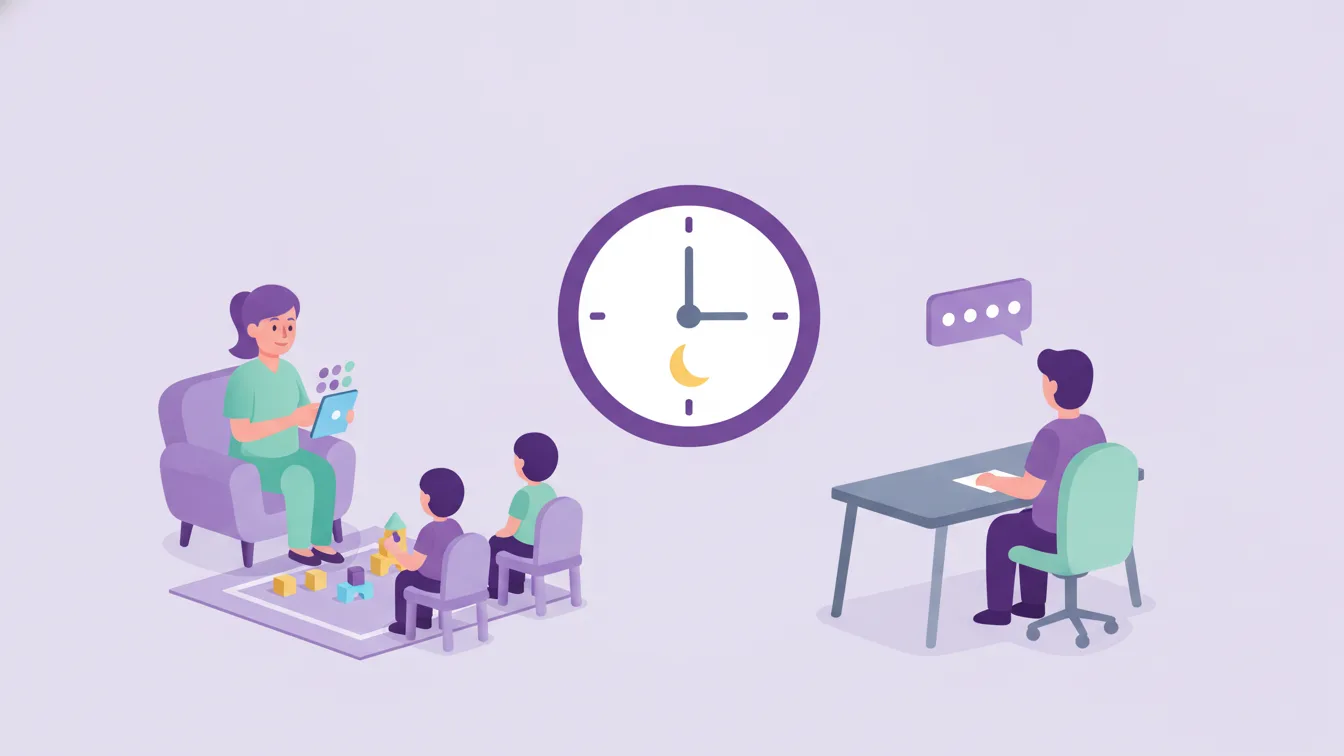
Messaging is the fastest bridge between school and home. A parent saying "I'll pick my child up a bit early today", or a teacher letting a parent know "there's a small scratch on her arm, don't worry, we've cleaned it", takes seconds. Left unmanaged, that same speed can swallow a teacher's evenings and weekends.
In this article I describe the setup that makes teacher–parent messaging sustainable for both sides.
What is a message for, and what isn't it for?
For messaging to work well, it first needs to be clear which conversations it is meant for:
- What messages are for: Short information about one child, small daily adjustments (early pick-up, clothing), and the teacher sharing information with a specific parent.
- What announcements are for: Information that concerns the whole class. Instead of writing the same thing to twenty parents one by one, you post a single announcement.
- What face-to-face meetings are for: Sensitive topics: behaviour, developmental concerns, family situations. These can be raised by message but not discussed by message; a meeting is arranged.
One-to-one or group?
In Funikid, messaging can be one-to-one or to a group. A group message is more conversational than an announcement and suits situations where you expect replies, such as "Is anyone not taking the bus for tomorrow's trip?" In a group message, however, parents' replies go to the teacher, not to each other. This avoids the "everyone writing to everyone" crowd of class chat groups.
Reply hours: state the boundary clearly
Teachers shouldn't be expected to answer messages at any moment. Giving parents the following information at the start of the term prevents a lot of tension in the months that follow:
- During which hours are messages answered (for example, during school hours on weekdays)?
- When will a message sent in the evening or at the weekend be answered?
- Who should be contacted in an emergency, and how? (The school's landline or the management)
The most important benefit of messaging through the school's own channel is that teachers don't have to share their personal phone number. The app respects the teacher's working hours; a personal number does not.
What makes a good teacher message
- Short and concrete: What happened, how are things now, does the parent need to do anything?
- Calm tone: Especially with small accidents, say "everything is fine" first, then the details.
- Share the positives too: If you only write to parents when there's a problem, every message gets opened with worry. Saying "today she helped a friend so nicely" now and then strengthens the relationship.
- Think of it as a record: A message in the school channel is part of the school's communication record. Professional language reads correctly when looked at later, too.
When the same question keeps coming
If three parents ask the same question within a week, it's time to turn the answer into an announcement. This small habit noticeably reduces a teacher's message load. Some repeated questions stop being asked altogether once information flows regularly: if meal information already reaches parents through meal tracking and arrival and departure information through attendance, the "did they eat, did they arrive" messages drop.
Notifications and managing expectations
When a message arrives, the parent's phone gets an instant notification. That speed is an advantage, but parents may expect an instant reply in return. That's why keeping the school's own notification routine reasonable matters as much as announcing reply hours. More on choosing channels in our article on the right channel to reach parents.
The role of management
School management shouldn't leave messaging rules to individual teachers; it should set and announce shared rules. It should be clear which topics are referred to management (payments, enrolment, complaints) and which a teacher can answer on their own. Who can see which conversations is also part of the school's permission settings.
Frequently asked questions
Can parents message each other?
The purpose of the school channel is communication between the school and parents. In group messages, replies go to the teacher; parents don't see each other's phone numbers.
Does the teacher have to reply to messages at the weekend?
No. Announcing reply hours at the start of the term and setting a separate route for emergencies protects the teacher's time off.
How should a sensitive topic be raised by message?
Ask for a meeting in a short message: "I'd like to talk with you for a few minutes; would tomorrow at pick-up suit you?" Discuss the details face to face.
How can I try messaging in Funikid?
With the 14-day free trial you can try one-to-one and group messaging in one class. For any questions, write to us.
About the author
Selin Kaya
Digital Content Specialist
Writes on Funikid's content team about school–parent communication, announcements and messaging routines. Answers the everyday questions of preschool and nursery leaders in plain language, with practical advice.