The newsletter is a small window through which the school tells parents "what happened this week and what is coming up." When it is well prepared, it is the content parents love most; when it is careless, it becomes a file that gets skipped without being opened. The difference is usually not in length but in focus.
In this guide I explain what daily and weekly newsletters should contain, how to keep them short, and why parents will open them regularly.
Announcement, message, and newsletter: which is for what?
- An announcement conveys a single topic: a holiday, a meeting, a trip. It is short and action-oriented. See how to write a school announcement.
- A message is a conversation with a parent or a small group that expects a reply.
- A newsletter is a summary of a period: what was done, what was learned, what is coming up. It doesn't expect a reply; it informs and builds a connection.
Keeping this distinction stops the newsletter from becoming "a sack that everything gets thrown into."
Weekly newsletter: a five-section skeleton
Using a fixed skeleton for the weekly newsletter both speeds up the person preparing it and lets parents find what they are looking for easily:
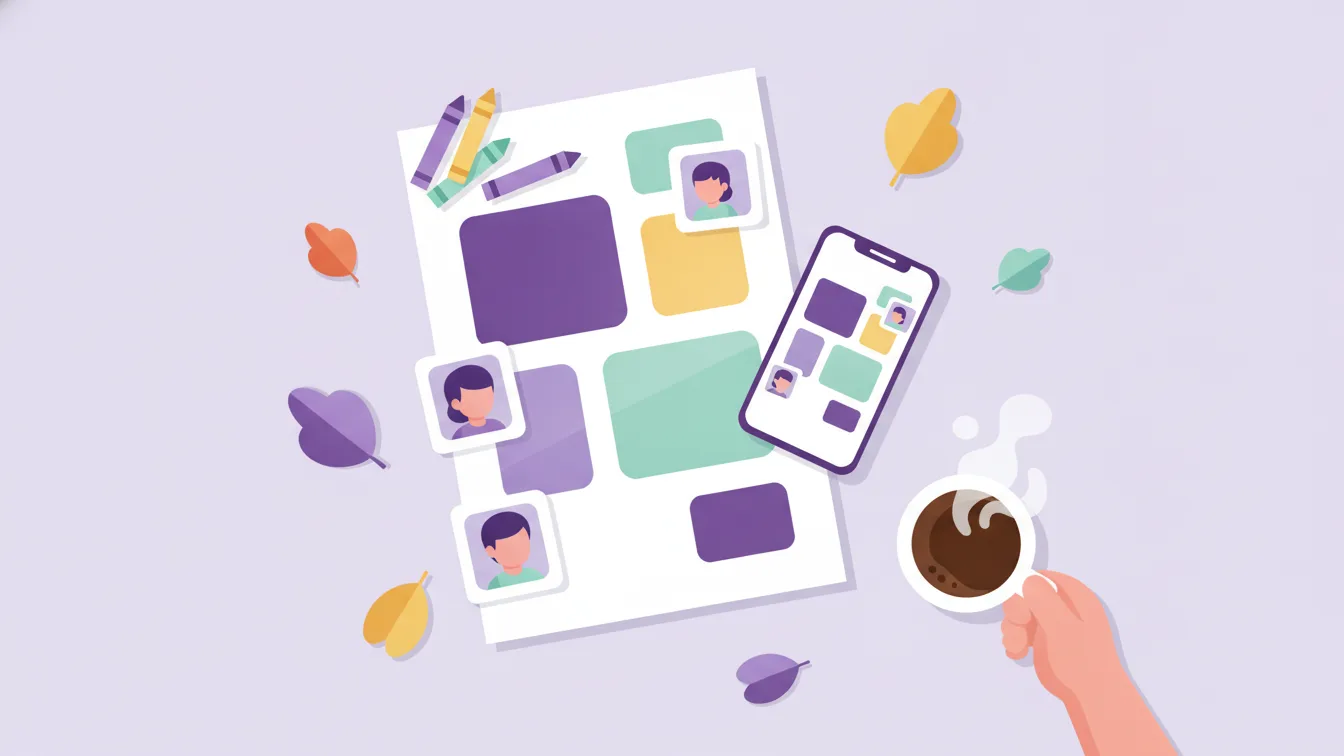
- Theme of the week: What topic was covered this week? A sentence or two is enough: "This week we talked about the seasons and the colors of autumn."
- Highlights: An activity, an experiment, or a song from class. The impact grows when it is supported with a few photos.
- Things to do together at home: A short suggestion for continuing the school topic at home. This is usually the section parents value most.
- Next week: The new theme, planned events, materials that need to be brought.
- Reminders: Deadlines, if any. These should also be sent as announcements; the newsletter shouldn't be the only channel.
Daily newsletter: shorter, more personal
In preschools and nurseries, some schools share a short daily summary in addition to the weekly newsletter. The keyword here is brevity. A daily newsletter should be something a parent reads in five seconds in the evening: the day's activity, a photo, maybe a one-sentence note.
For child-specific information (what they ate, how they slept), separate modules are a better fit. In Funikid, for example, meal status is shared through meal tracking and class photos through the gallery. That way the newsletter can focus on the class's shared story.
Format: PDF, image, or text?
In Funikid, newsletters can be shared as PDF, JPEG, or PNG. Which one you choose depends on the content:
- Single-page image (JPEG/PNG): The easiest format to read on a phone. Ideal for a weekly plan, a menu, or an event poster.
- PDF: Suitable for multi-page content that is expected to be printed. Something like a monthly program or a term plan.
- Short text + photos: The fastest way for daily sharing.
Don't forget the phone screen: a PDF prepared at A4 size with small text can't be read on a phone without zooming in. If you are preparing an image newsletter, use large text and little copy.
Four habits that get parents to read the newsletter
- A regular day and time: A newsletter that arrives every Friday afternoon becomes something parents look forward to.
- A consistent look: The same template, the same colors. Parents recognize the newsletter at first glance.
- The child's voice: A funny sentence said in class or the children's drawings make the newsletter worth reading.
- Keeping it short: A newsletter that runs past one screen gets scrolled past unread.
Preparing it without burdening the teacher
The newsletter shouldn't be a job left to the teacher's Friday evening. Practical suggestions:
- Upload the photos taken during the week to the gallery regularly; on Friday you only make a selection.
- Prepare the template once; only the content changes each week.
- Let management prepare school-wide news, and let the class teacher write only their own class's section.
For other ways of reducing the teacher's paperwork, see this article.
A note on privacy
Photos in the newsletter go to all the parents of the class. So pay attention to children's sharing permissions for photos placed in the newsletter; don't put a photo showing the face of a child without permission into the newsletter. Detailed suggestions are in our article on photo sharing.
Frequently asked questions
How many times a week should a newsletter be sent?
Once a week is enough for most schools. If a short daily update is shared, the weekly newsletter works as a summary; the content of the two shouldn't repeat each other.
Should the newsletter go to the whole school or to the class?
A class newsletter goes to the class, a school newsletter to the whole school. Sharing by class ensures parents only see content that concerns their own child.
How can we be sure parents have seen the newsletter?
When the newsletter is shared through the app, the parent receives an instant notification. A regular day and time also turn the newsletter into something parents expect.
How can I try sharing a newsletter in Funikid?
With the 14-day free trial you can share your first newsletter this week. Write to us with your questions.
About the author
Zeynep Çelik
Digital Content Specialist
Covers parent experience, the mobile app, privacy and digital organisation at school on the Funikid blog. Enjoys translating technology into a school's daily routine and explaining it with clear examples.